Best Promotional Products for Trade Shows
Posted by Promo On Demand on 10th Nov 2026
A crowded exhibition hall gives people seconds to decide whether to stop at your stand, and even less time to remember you afterwards. The best promotional products for trade shows are not simply the cheapest items that can carry a logo. They give attendees a reason to engage, make your brand useful after the event and support the commercial outcome you came for - whether that is qualified leads, product awareness or stronger client relationships.
For Australian businesses, the right choice comes down to audience, event format, budget, brand position and logistics. A branded pen may be exactly right for a high-volume community event. It may be the wrong signal for a premium technology showcase where decision-makers expect something considered. Effective event merchandise is planned as part of the stand experience, not added to the order at the last minute.
Best promotional products for trade shows start with utility
The most successful giveaways earn their place in a bag, on a desk or in daily routines. Practicality matters because a product that gets used keeps your brand visible long after the lanyards are packed away.
Drinkware that stays in circulation
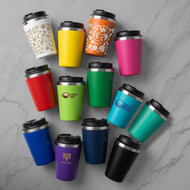
Reusable drink bottles, insulated tumblers and coffee cups are strong choices for exhibitions, conferences and outdoor trade events. They have generous branding areas, suit sustainability-minded audiences and are perceived as higher value than a disposable giveaway. At multi-day events, a quality bottle can also solve an immediate attendee need.
The trade-off is cost and freight. Drinkware is heavier and more space-intensive than small merchandise, so quantity planning matters. Consider reserving premium bottles or tumblers for booked meetings, competition winners and priority prospects rather than placing them in an open giveaway bowl.
Bags that carry the brand around the venue
Tote bags, drawstring bags and practical conference bags have a job to do from the moment they are handed over. Visitors need somewhere to put catalogues, samples and lunch, which means your branding can travel across the show floor all day.
Choose the bag according to the event and the audience. Cotton totes suit lifestyle, education and sustainability-focused brands. Non-woven bags can work well for large-volume campaigns. A structured backpack or cooler bag can create a more premium incentive for appointments or post-event follow-up. Ensure the print colour and placement remain clear at a distance, particularly in busy exhibition spaces.
Writing instruments and desk essentials
Pens remain a trade show staple because they are compact, affordable and broadly useful. The key is to avoid treating all pens as equal. A smooth-writing metal pen or a well-finished recycled pen reflects more care than a basic model that fails after a few uses.
For audiences working in offices, add useful desk items such as notebooks, sticky notes, cable organisers or mobile stands. These products are especially effective when your sales team can tie the item to a relevant conversation. A notebook given to someone attending a presentation feels more intentional than one handed out without context.
Technology accessories for business audiences
Charging cables, power banks, webcam covers, wireless chargers and Bluetooth trackers can be high-impact for B2B events. They suit visitors who travel, work between meetings or spend long days on the floor. Their value is obvious, which can help turn a simple scan of a QR code or a booked demonstration into a worthwhile exchange.
Technology merchandise needs more diligence than simpler items. Check compatibility, charging specifications, print area and product quality before committing. Cheap electronic accessories can create frustration instead of goodwill, so this is a category where supplier guidance, samples and quality control are worth the investment.
Match the giveaway to the interaction
Not every visitor should receive the same item. A considered merchandise plan uses product tiers to support different levels of engagement without making the stand feel transactional.
For a busy event, a simple structure may include:
- A small, practical giveaway for general foot traffic, such as a pen, lip balm or reusable coffee cup.
- A mid-value item for visitors who provide meaningful details or complete a product demonstration.
- A premium item for pre-booked meetings, key accounts or qualified opportunities.
- A staff kit that keeps your team professional and comfortable throughout the event.
This approach protects budget while making higher-value products feel earned. It also helps staff focus on the conversations that matter. A premium gift should support a genuine next step, not disappear into a bag with twenty other giveaways.
Food items can be effective for drawing attention, particularly at long events, but they are usually short-lived. Branded confectionery, snack packs or coffee vouchers work best as a conversation starter alongside a useful take-home product. Be mindful of dietary requirements, shelf life and how food will hold up in transit or warm venues.
Brand execution matters as much as the product
A quality product with rushed artwork can weaken the impression you are trying to create. Before production, consider more than whether your logo fits. Ask whether the artwork has enough contrast, whether fine detail will reproduce cleanly and whether your brand colours are achievable on the selected material.
Some products suit a full-colour design, while others look better with a restrained one-colour print, laser engraving or subtle debossing. A premium black bottle with a crisp laser-etched logo may feel more polished than a bright full-wrap design. It depends on your brand guidelines, the product finish and the role the item plays in the campaign.
Include a clear call to action where it makes sense, but do not crowd every item with copy. A web address, campaign message or QR code can be useful on bags, notebooks and larger products. On a pen or keyring, legibility is more valuable than trying to include every service line. Your logo should be instantly recognisable, not reduced to visual clutter.
Artwork proofs are a practical safeguard. Review them for spelling, colour references, placement and scale before approving production. This stage is where a dependable merchandise partner adds value by identifying risks early, rather than leaving your team to discover them when cartons arrive.
Plan quantities, lead times and freight early
Trade show merchandise often becomes urgent because it is ordered after stands, travel and collateral have consumed the planning timeline. Yet availability, decoration methods and freight schedules can all affect the final outcome. Ordering early gives you better product choice and more room to approve artwork without pressure.
Start with expected attendance, then estimate the number of meaningful interactions your team can realistically have. If 3,000 people attend but your stand can engage 600 visitors, ordering 3,000 premium gifts is unlikely to be efficient. Build in a sensible contingency for staff, VIPs and unexpected demand, but avoid over-ordering dated event-specific stock.
Ask practical questions before placing an order. How many cartons will arrive? Who will receive them at the venue? Is there a loading dock booking, storage fee or delivery deadline? Are you taking stock to interstate events? Freight is not an afterthought when you are dealing with bulky drinkware, bags or large quantities of merchandise.
For organisations exhibiting regularly, a managed merchandise approach can reduce this repeat admin. Promo On Demand can help coordinate product selection, branded artwork, production and delivery so teams can maintain consistency across multiple events without starting from scratch each time.
Make the product part of the follow-up
The product itself does not replace a follow-up plan. It gives that follow-up more context. If visitors received a branded charger after a demonstration, your sales team can refer to the conversation and the product they took away. If you ran a tote bag campaign, a post-event message can reinforce the offer attached to it.
Train stand staff on when to use each item and what action should follow. The best merchandise supports a clear exchange: useful product for useful engagement. That may mean a meeting booking, a demo, a competition entry or a qualified conversation. Scanning badges without a reason to reconnect creates a database, not momentum.
Choose one or two products that genuinely fit your audience, execute the branding properly and give your team a clear reason to hand them out. When merchandise is useful, well-presented and operationally planned, it keeps working long after the exhibition floor has cleared.