Affordable Promotional Products Australia That Work
Posted by Promo On Demand on 18th Nov 2026
A cheap giveaway that is left on an event table is not affordable. It is wasted budget, wasted freight and a missed chance to put your brand in someone’s hands. Affordable promotional products Australian businesses can rely on are the items people genuinely keep, use and associate with a professional experience.
The right choice is rarely the lowest unit price. It is the product that suits the audience, carries your branding well, arrives when promised and delivers enough useful life to justify the spend. For marketing teams, HR departments and procurement managers, that is where value becomes measurable.
What affordable really means in branded merchandise
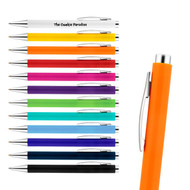
Affordability is about the total cost of achieving your objective, not the figure beside a product in a catalogue. A $2 pen may look efficient until the ink fails, the print rubs off or it disappears before your team has finished the conference. A slightly better pen that stays in a client’s bag for six months can be a far stronger investment.
The same principle applies across drinkware, apparel, bags, onboarding packs and event merchandise. Consider the cost per meaningful impression, the product’s usefulness and how well it reflects the standard of your business. A practical item with clean, legible branding will usually outperform a novelty item chosen only because it was inexpensive.
There is also an operational component. Last-minute changes, unclear artwork requirements, split deliveries and unexpected decoration costs can quickly erode an apparently low price. A dependable supplier should make the full requirement clear early: product specification, branding method, lead time, quantity breaks and delivery expectations.
Start with the moment your merchandise needs to serve
The most cost-effective product depends on where it will be used and who will receive it. Buying before defining that moment is how organisations end up with surplus stock that does not fit the campaign.
For a trade show, the priority is portability and fast distribution. Compact drinkware, quality pens, tote bags and useful desk accessories can work well because visitors can carry them immediately. If the audience includes decision-makers, fewer higher-quality pieces may deliver more value than thousands of basic giveaways.
For staff onboarding, the aim is different. Merchandise needs to create belonging and support day-one practicality. A branded notebook, drink bottle, lanyard or apparel item can become part of a considered welcome pack, especially when the colour palette and decoration are consistent across every item.
Client gifting calls for more restraint. A premium-feeling item that aligns with the recipient’s working day, such as insulated drinkware, well-made tech accessories or curated gift packs, is often more appropriate than a heavily branded novelty. The branding should be present and polished, not overpowering.
Match product life to campaign life
Short campaigns can justify lower-cost, high-volume products, provided the item remains useful and the print is clear. Annual events, recruitment programs and employee recognition initiatives deserve products with a longer shelf life. If you expect people to use an item repeatedly, choose materials and branding methods that can withstand repeated handling and washing.
That does not mean every project needs a premium price point. It means selecting the right level of quality for the expected lifespan. A one-day community activation and a 12-month staff uniform program should not be assessed by the same criteria.
Where your promotional budget is actually spent
Understanding the cost drivers makes it easier to compare quotes properly. Product cost matters, but it is only one part of the final investment. Quantity, decoration method, number of print positions, artwork complexity, packaging, production time and delivery all affect the outcome.
Volume is usually the most obvious lever. Larger quantities can reduce the price per unit, but only if you can use the stock within a sensible period. Ordering 5,000 units to achieve a lower unit price is false economy if 3,000 sit in storage after the event or become outdated when your branding changes.
Decoration also matters. A single-colour print on a flat surface is generally more economical than multiple print locations, full-colour artwork or detailed embroidery. However, reducing decoration should not reduce recognition. A strong logo, a clear brand colour and enough contrast to read at a glance will often do more than an overworked design.
Lead time is another common pressure point. Rush production and urgent freight can change a well-planned budget very quickly. Where possible, build merchandise selection and artwork approval into campaign planning early. This gives you access to a broader range of products and allows time to resolve details before production begins.
How to choose affordable promotional products in Australia
Begin with a realistic quantity and a clear distribution plan. Ask how many people you expect to reach, how many items each person needs and whether there are multiple locations to service. This prevents both under-ordering and expensive excess.
Next, choose one primary product category that fits the purpose. Event teams may start with bags or writing instruments. Internal campaigns may centre on apparel or drinkware. A focused selection looks more intentional and helps keep your budget under control.
Then assess each option against three practical questions: Will the recipient use it? Will our branding look good on it? Can it be delivered within our timeframe? A product that meets all three is usually a better purchase than one with a lower headline price but weak suitability.
Artwork approval should be treated as a quality checkpoint, not an administrative task. Review logo placement, print size, colour reproduction and any small text before production. A proof is your opportunity to identify issues that are cheap to fix before printing and expensive to fix afterwards.
Finally, factor delivery into the original plan, particularly for national campaigns. Sending stock to offices, event venues or remote teams across Australia requires coordination. Consolidated delivery may be the best-value option in one case, while split delivery is more efficient for a distributed workforce. The right approach depends on deadlines, storage capacity and who needs the products in hand.
Choose products people do not throw away
Useful merchandise earns attention through repetition. Every time a recipient writes a note, carries lunch, fills a bottle or puts on a jacket, your brand has another opportunity to be seen. That is why everyday utility remains a reliable guide for affordable promotional products.
Pens and notebooks remain effective when quality is appropriate. Tote bags offer strong visibility at events and can be reused well beyond the day. Drinkware has a higher perceived value and suits both staff and client audiences. Apparel can build team identity, but sizing, fit and stock management need more planning than a one-size item.
Sustainability should also be considered with care. The best environmental outcome is often a product that is kept and used, rather than a token item made from a recycled material but quickly discarded. If sustainability is central to your brand, look beyond surface claims and select products that suit your audience, campaign and expected product life.
Consistency saves more than money
When every campaign starts from scratch, teams lose time approving products, recreating artwork and chasing stock information. Inconsistent branding also makes a business look less organised, even when individual items are good quality.
A planned merchandise range solves this. Establish a small group of approved products for common needs, such as events, new starters, client gifts and staff recognition. Set brand standards for logo use, colours and decoration. Keep repeatable artwork files ready. This creates faster ordering, cleaner execution and more predictable costs.
For larger organisations, a custom merchandise portal or staff ordering system can make an even greater difference. Teams can access approved items without re-litigating every product decision, while procurement retains visibility and brand teams maintain control. It is a practical way to build a branded ecosystem rather than treating merchandise as a series of disconnected purchases.
Promo On Demand supports this approach with product guidance, clear quoting, artwork proofs and systems that make repeat ordering easier to manage. The objective is simple: merch made simple, done properly.
The next time you compare promotional products, do not ask only what costs the least. Ask what your recipients will keep, what your team can order confidently and what will represent your brand well after the campaign ends. That is the purchase that stays affordable.